Sometimes, a photograph holds much more than the single moment captured in the image. It can carry months of attempts, travels, early mornings, and hours of waiting. For Alonso Sánchez Ramos, creator of Alphons Experience, each shot also tells a story about patience, perseverance, and the natural wealth of Costa Rica.
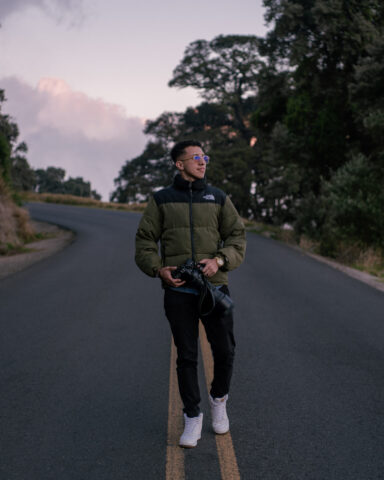
Alonso is originally from Alajuela, Costa Rica. From a young age, he was interested in learning new things and discovering different places. When he was in high school, around 12 or 13 years old, he began getting closer to photography. He didn’t have a professional camera: he started with a phone and learned on his own by watching online videos and observing the work of other photographers. What began as curiosity gradually turned into a passion and a way to express what he feels for nature.
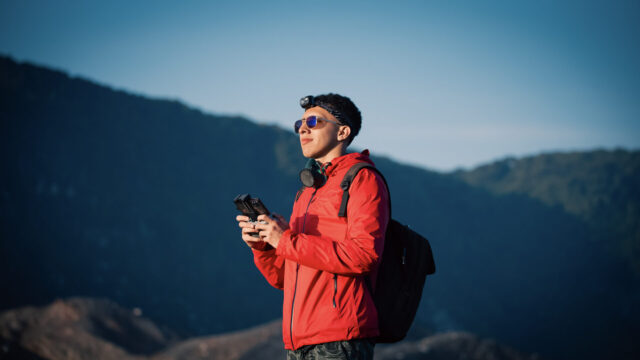
Today, he resides in the province of Heredia and, from there, travels to different regions of the country to photograph its biodiversity and develop experiences related to the natural environment. His project, Alphons Experience, is mainly focused on wildlife and landscape photography.
Although his path took a different direction, as a child he dreamed of becoming a race car driver. He was attracted to automobiles, speed, and everything related to the automotive world—an affection that, according to him, he still holds.
He defines himself as a curious, persevering, and creative person. He likes to learn, explore different fields, and search for ways to improve. When he sets a goal, he usually puts in the effort until he achieves it. Among his virtues, he recognizes patience, dedication, and the desire to learn. Also, he admits that he can be demanding with himself and spend a lot of time on a project because he wants to achieve the best possible result. He believes that high self-demand also drives him to grow.
His interests and background span more than one field. He studied networking and telecommunications, an area related to technology that encompasses topics like cybersecurity. He also studied jewelry design, a discipline he finds fascinating because it allows creating pieces from scratch—such as rings and other jewelry—using materials like gold. Additionally, he has explored other creative activities, including crafting resin tables.
“I have always liked learning different things and not limiting myself to a single discipline. However, photography is the activity I am most passionate about: in it, I have found a way to combine creativity, curiosity, and the exploration of nature,” he said.
A Biodiversity That Inspires
What inspires him most about Costa Rica is its biodiversity. In a territory he considers small, there are forests, mountains, rivers, coasts, and a massive variety of animals and plants. Sometimes he says that those who live there are not fully aware of the privilege of finding extraordinary colorful birds, wild mammals, and unique ecosystems just a few hours away.
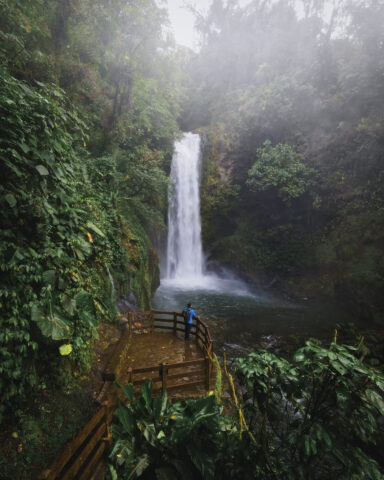
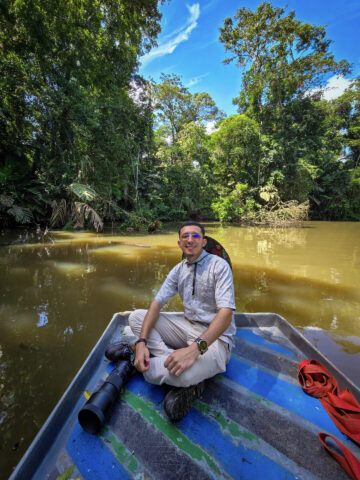
For Alonso, Costa Rica is a natural paradise and that abundance of life is a constant source of inspiration. He also considers it a responsibility: protecting that wealth so future generations can enjoy it.
In photography, he finds the possibility of capturing a moment that might never happen again and sharing it with other people. “An image can bring the public closer to an animal they would hardly have the opportunity to observe up close, or reveal details of nature that usually go unnoticed,” expressed the Tico photographer.
As a curious fact, Alonso emphasized that photography can represent barely a fraction of a second, even though behind it there might be months of work, trips, early mornings, and long waits. Occasionally, he spends days trying to get an image without success. “When the opportunity finally presents itself, everything happens in a matter of seconds. That’s why each photograph has its own story and is much more than the visible result.”
Learning Step by Step
His interest in photography was born in high school, experimenting with his phone and learning self-taught. YouTube and images of photographers showcasing incredible places motivated him to study and imagine the photographs he could take one day.
After finishing high school and getting his first job, he was able to buy his first drone. On one occasion, he met two photographers who were photographing a lagoon; that experience ignited his interest even further. From then on, he began investing in equipment little by little and exploring landscape photography. Over time, his focus shifted more and more toward wildlife.
His path has been progressive. He didn’t start with all the equipment he wanted: he advanced gradually, learned on his own, and acquired tools as his budget allowed. Although his interest in photography started in adolescence, it was in 2022 when he began taking it more seriously and devoting greater effort to his development. Since then, he has continued learning, refining his technique, and building his style.
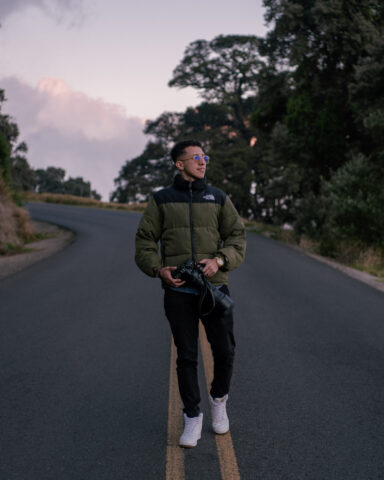
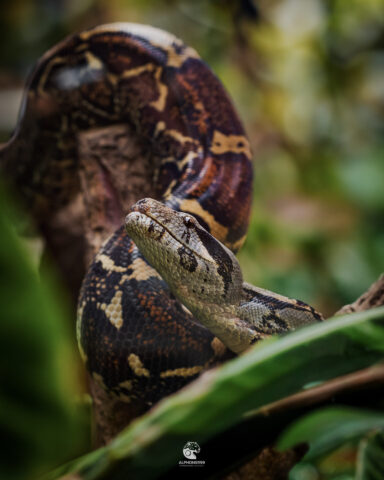
He doesn’t keep an exact count of how many photographs he has taken. In wildlife photography, it is common to take many shots in a short period, especially when trying to register a specific behavior or moment. He holds a large amount of images, but for him, the important thing is not accumulating a number, but observing the quality of his work and how much he has evolved. He is interested in recognizing what he has learned and how he has developed his own style.
So far, he has not received formal awards in photography contests. However, he has had the opportunity to work with major brands, such as Motorola, which has sponsored him. He considers these opportunities a valuable recognition of the work he has been developing and a motivation to keep growing. Among his goals are continuing to build his portfolio, participating in larger-scale projects, and carving a path toward new opportunities within nature photography.
Three Months or More Searching for the Perfect Photo
Among the images that hold the most meaning for him, there are two he remembers because of the journey he had to undertake to get them. The first is a leucistic chestnut-mandibled toucan, photographed in Guápiles, Limón.
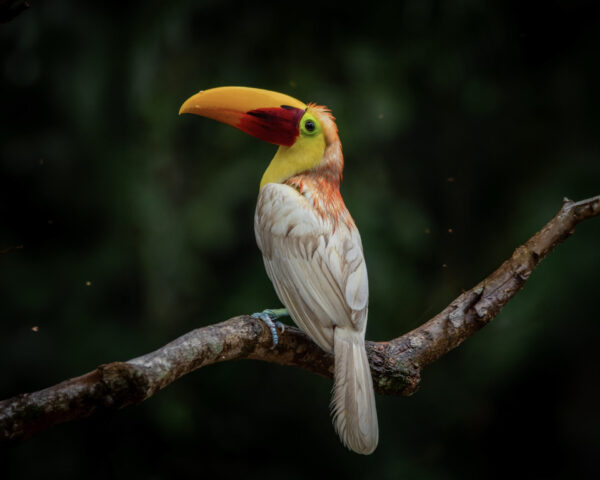
For almost three months, he tried to get that image. He traveled many times, even during the week. On some weekends, he woke up at two or three in the morning to arrive at the spot around five. He could spend all day there, from morning until five or six in the evening, but the toucan wouldn’t show up.
Sometimes, the heat prevented the toucans from coming down. There were also days when access was closed and he had to return home without even reaching the point where he hoped to photograph it. It meant many trips, early mornings, expenses, and hours of waiting. Finally, after almost three months, the bird appeared. The encounter lasted less than a minute, and Alonso had to make the most of those few seconds.
He doesn’t necessarily consider it his best photograph, but certainly one of the most rewarding. Every time he sees it, he remembers everything behind it and what it meant to get it after so many attempts.
The second special image is of the Arenal Volcano in La Fortuna. Getting the scene he had in mind took him more than a year and more than 15 visits to the area. As often happens with landscapes, conditions aren’t always ideal: the volcano might not be clear, and it is possible to travel there without finding the scene being sought. After many attempts, he achieved the photograph he wanted.
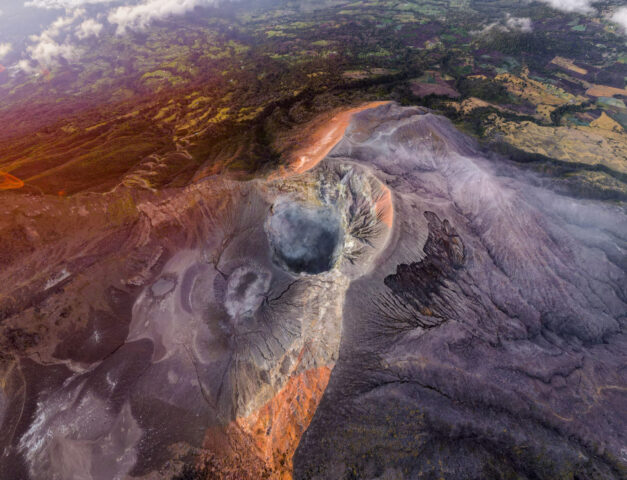
Both images represent for him the patience and perseverance that nature photography demands. “They have taught me that the value of a photograph is not only in the final result, but in the entire path traveled to get it,” he highlighted.
The experience with the toucan left him, moreover, with one of his greatest lessons: results don’t always arrive when expected. There were occasions when he woke up at dawn, traveled for hours, and spent the entire day waiting without getting the image. Investing time and resources without achieving what he was looking for could be frustrating. However, he understood that every outing is also part of the process.
In his view, nature photography requires accepting uncertainty, learning from every experience, and recognizing that not everything happening in the natural environment can be controlled.
Look, Wait, and Respect
Alonso Sánchez explained that through wildlife photography, animals don’t always appear under ideal conditions. They might be far away, hidden among vegetation, behind branches, or in low-light areas. Furthermore, many move fast, so one has to react in a matter of seconds.
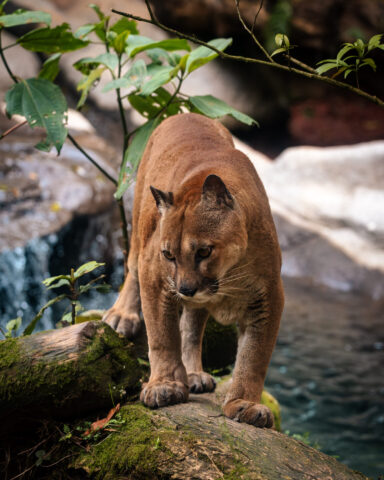
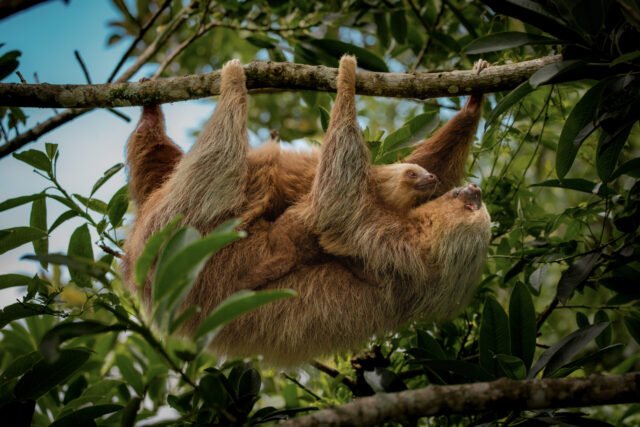
To freeze motion, proper shutter speeds and precise focus are required, especially when working with telephoto lenses and subjects that constantly change direction. Additionally, one must balance speed, aperture, and ISO to achieve proper exposure without losing detail or sharpness.
But the challenge is not solely technical. It consists of anticipating animal behavior, having patience, and seizing the opportunity when it appears—always respecting their space and natural behavior.
Alonso wants to convey admiration for nature and raise awareness about the importance of protecting it. He considers that Costa Rica has the privilege of having birds, mammals, and many other animals that form part of unique ecosystems, but added that this wealth is vulnerable to human actions.
Through his images, he hopes people stop to observe, discover the beauty of a species, and understand that behind each animal exists a habitat that needs protection. He would like his photographs not only to be attractive, but also to spark curiosity, respect, and a greater commitment to conservation. For him, knowing and valuing nature is one of the first steps toward learning to care for it.
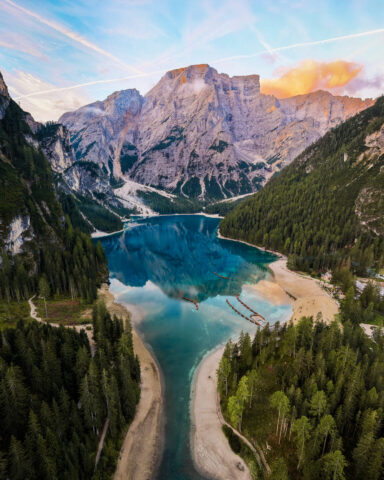
His work focuses mainly on two areas: wildlife photography and natural landscapes. In the first, he documents birds, mammals, reptiles, amphibians, and other species of Costa Rican biodiversity. He is interested in highlighting the details, expressions, and characteristics that make each animal special. In landscapes, he seeks to convey the beauty of settings like tropical forests, mountains, coasts, and alpine scenery. He uses drones to explore aerial perspectives and show landscapes from a different point of view.
To those who dream of dedicating themselves to photography, especially younger people, he advises not waiting to have the most expensive equipment to start. He began with a phone, learned on his own with online videos, and bought his gear gradually as his possibilities allowed.
“Today there is plenty of free information to learn about composition, exposure, lighting, and animal behavior. The best gear to start with is the one you already have in your hands. What matters is practicing, observing, making mistakes, and learning constantly,” he assured. Sánchez recommends having patience and not comparing oneself too much with other photographers: each person follows their own process and pace. The fundamental thing is to enjoy what you do and strive to improve with every photograph.
Hikes to Discover and Learn
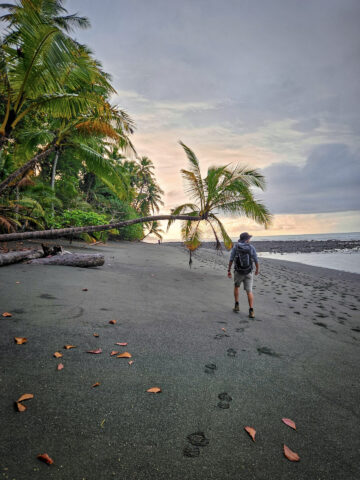
Alonso also conducts field trips and photographic tours in different regions of Costa Rica with the purpose of discovering new places and documenting their biodiversity. Thus, he usually organizes weekend hikes together with a friend. Together, they are developing a project to explore different sites in the country and expand their experiences with wildlife photography activities.
Likewise, they are working on a proposal for nature hikes and experiences. For now, they organize tours mainly on weekends and seek to strengthen the project, incorporating more wildlife photography activities. The idea is for participants to enjoy the landscapes while learning to observe and photograph the species they encounter.
“More than just visiting a place, we want to offer the opportunity to discover the country’s biodiversity, learn along the way, and develop a greater appreciation for nature,” he emphasized.
Each outing demands planning, knowledge of the environment, and a lot of patience. Sightings depend on environmental conditions and animal behavior, making every tour different.
Every Ecosystem Presents Its Own Challenges
Recently, Sánchez traveled to the Dolomites in Italy to photograph the Italian Alps and learn about some of the fauna in that region. He shared that the experience was very enriching because it put him in front of scenarios and conditions different from those he knows in Costa Rica.
In Costa Rican tropical forests, dense vegetation, humidity, and low light beneath the canopy represent some of the main challenges. Finding and photographing animals among so many branches and leaves requires patience and attention.
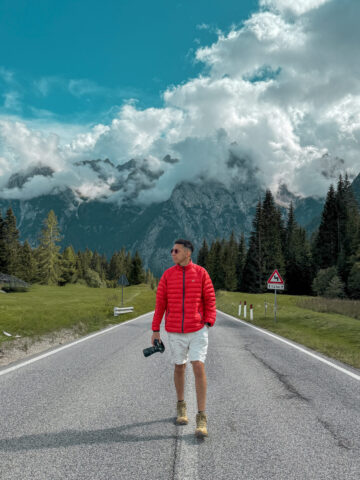
In alpine landscapes, he detailed that grand mountains, wide open spaces, and weather conditions are ever-changing. Light, climate, and composition pose different challenges, and each setting demands adapting the way one works.
“These experiences have allowed me to understand that every ecosystem has its own identity and that photographing nature implies continuously learning to adapt to the place in front of you.”
Places in Costa Rica He Always Wants to Return To
Corcovado is one of the places he would always like to return to, due to its immense natural wealth and the opportunities it offers to observe wildlife in an extraordinary setting. He also enjoys places like Arenal and the forested regions of the Caribbean, where he always finds new possibilities to explore and photograph.
Among species, he is especially drawn to those difficult to observe, which require time, patience, and preparation to achieve a good photograph. That search is part of what he enjoys while exploring Costa Rica: even when returning to a familiar place, there is always the possibility of discovering something new.
A Continuing Path
Alonso envisions himself growing as a nature photographer, developing new projects, and taking Alphons Experience into new stages. He wants to continue documenting Costa Rica’s biodiversity and share his work with an ever-wider audience.
“One of my biggest dreams is to travel to Africa for a photo safari. I would like to photograph lions in their natural environment and document the fauna of that continent,” he said. That would be an opportunity to learn, face new challenges, and broaden his perspective as a photographer. He wants to explore other countries, discover different ecosystems, and strengthen his nature and photography projects. He feels he still has countless species, places, and stories left to discover.
You can follow Alonso Sánchez’s social media accounts: Instagram @alphonsr99, and on Facebook you can find him as (Alonso Sánchez) to learn more about his photographic work, hikes, and daily life.