Cynthia Bandurek was born and raised in Buenos Aires, Argentina. Despite growing up in a bustling metropolis, she felt a deep curiosity about the natural world from an early age. As a child, she read ecology books, science magazines, and everything she could find about animals, plants, and ecosystems. She also spent hours painting and drawing natural scenes, unaware that this attentive way of observing would stay with her for life.
“I always knew, in some way, that I wanted to be close to nature, even though as a child I didn’t know exactly what that path would look like,” she recalled.
Wildfires, injured animals, and news about environmental destruction deeply affected her. At age ten, she came across a poem titled “El llamado de la Tierra” (The Call of the Earth) in a science magazine. Reading it left a lasting impression: it felt like recognizing something she already carried inside. She wanted to study nature, understand it, and dedicate her life to protecting it.
Over time, that calling became her profession. She studied ecology and trained as a field naturalist. For twenty years, she worked with CONICET (Argentina’s National Scientific and Technical Research Council) and conducted research at esteemed scientific institutions, including the Bernardino Rivadavia Natural Sciences Argentine Museum and the Darwinion Institute of Botany. She dedicated her career to research, biodiversity documentation, environmental education, and science communication—later integrating nature photography and naturalistic art, which had accompanied her since childhood.
“Looking back now, I don’t think I dreamed of a specific profession as a child. I dreamed of understanding this fascinating world, expressing it through art, and doing something to protect it. In a way, that is exactly what I ended up doing,” she said.
The Decision to Move to Costa Rica
In January 2021, Cynthia made a life-changing decision: relocating to Costa Rica. She sought to live closer to nature and build a lifestyle aligned with what brought her true happiness. The country’s extraordinary biodiversity had drawn her for years, prompting her to start a new chapter.
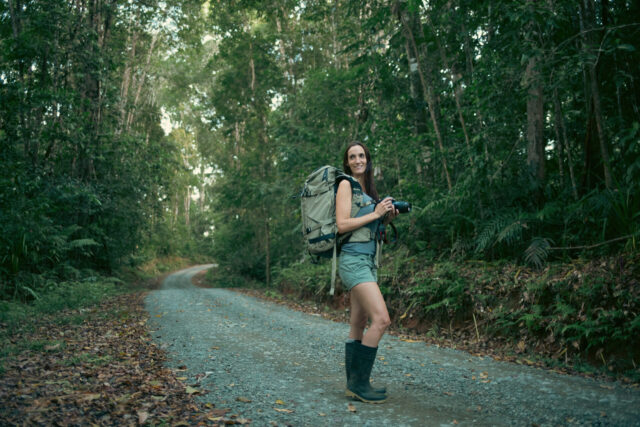
Today, she resides in Puerto Jiménez on the Península de Osa, a location that seamlessly aligns with her lifestyle. Surrounded by dense jungle and adjacent to the ocean, she can ride her bike and, within minutes, find herself on a rainforest trail or facing the sea.
A Curious, Sensitive, and Persistent Perspective
Bandurek describes herself as deeply curious, driven by a constant need to understand, discover, and learn. She also views her natural sensitivity as core to how she perceives the environment. Rather than treating an animal as a mere photographic subject, she is interested in its life, its history, its behavior, and how it evolved.
READ ABOUT
She considers herself a self-taught, persistent observer. When a subject captures her interest, she devotes countless hours to studying it. She also acknowledges her high self-exacting standards: she ponders details deeply and strives to understand ecosystems to their smallest mechanics.
Over the years, her career has merged ecology, natural history, conservation, photography, art, and storytelling into a unified discipline.
Biodiversity as Daily Inspiration
For Cynthia, an ordinary walk in Costa Rica can turn into an extraordinary discovery. In the Osa Peninsula, those opportunities multiply exponentially: a short bike ride can reveal monkeys, birds, tropical plants, fungi, or micro-fauna that spark a new photographic story.
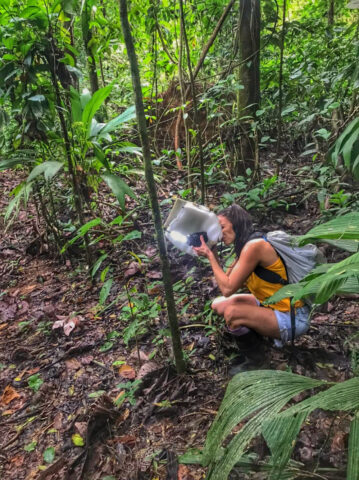
The rain, the jungle canopy, the ocean, shifting light conditions, and rainforest sounds form the backdrop of her daily life and creative process. For her, the defining feature of photographing in Costa Rica is not just its concentrated biodiversity, but living inside the environment rather than visiting it temporarily as an outsider.
While she has spent years documenting the Pacific coast’s biodiversity, she plans to explore other regions of the country more deeply, particularly the Caribbean rainforests and species.
READ MORE
From a Small Pocket Camera to 20 Years of Photography
Her entry into photography occurred during her field naturalist training. To collect data and document findings in the wild, she purchased a basic pocket camera.
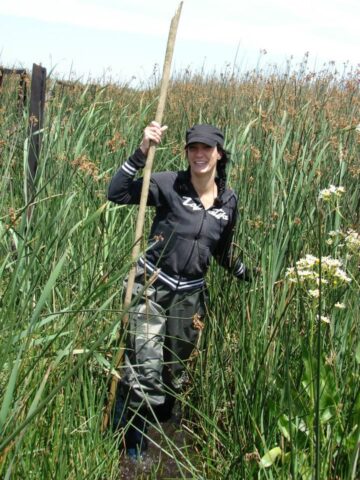
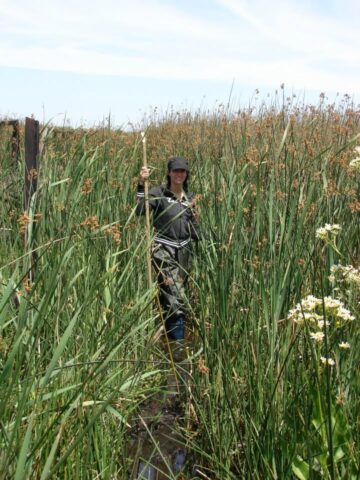
During a nocturnal monitoring session in a nature reserve near Buenos Aires, she stepped into the marshland with her rubber boots to photograph frogs. Her curiosity quickly led her to capture the macro-arthropods active at night.
“That was when my mind blew open—discovering everything I could see through the camera lens that my bare eyes were missing,” she recalled.
That revelation spurred her to master camera technique, upgrade her gear, and pursue photography independently. What began as a tool for field data collection evolved into a core pillar of her life’s work.
Since discovering photography in 2006, she has specialized in macrophotography. Even after taking thousands of images over two decades, she vividly recalls where each photo was captured—even for tiny organisms—remembering the location, timing, and environmental circumstances. For her, that memory stems from the intense presence required by photography: observing, listening, and understanding what unfolds before the lens.
Science and Art to Tell Conservation Stories
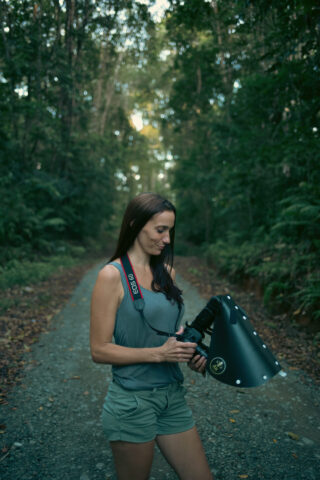
Macrophotography reveals a hidden universe that remains largely invisible to the human eye.
“It surrounds us, but our eyes cannot perceive it in its full dimension,” she explains.
Through her images, she bridges her scientific background in ecology and natural history with the visual language of photography and painting. Storytelling serves as the bridge: by combining visuals with contextual narrative, she aims to spark curiosity and raise awareness about biodiversity conservation.
Rather than merely displaying what an animal looks like, Bandurek seeks to evoke an emotional response—wonder, curiosity, tenderness, or surprise. She wants the image to prompt questions long after the viewer looks away: “How can something like this exist without me ever noticing it?”
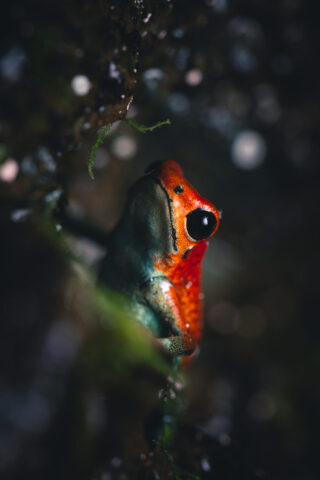
Following the visual impact comes the story: the organism’s identity, habitat, survival strategies, and role within the ecosystem.
“Macro photography starts long before you take out the camera. It begins when we learn to look for what we wouldn’t normally search for,” she notes.
Frogs, Arthropods, and Otherworldly Creatures
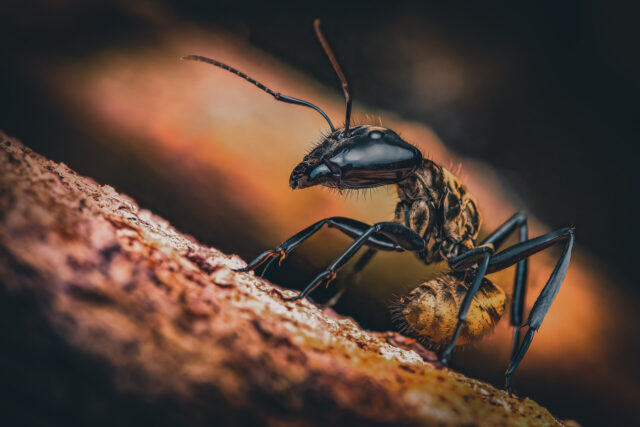
Among her favorite subjects are frogs and insects. Regarding frogs, she noted that they are charismatic and photogenic. She likes to look for perspectives that highlight their personality and craft images that make anyone looking at them stop and think: ‘How charming!
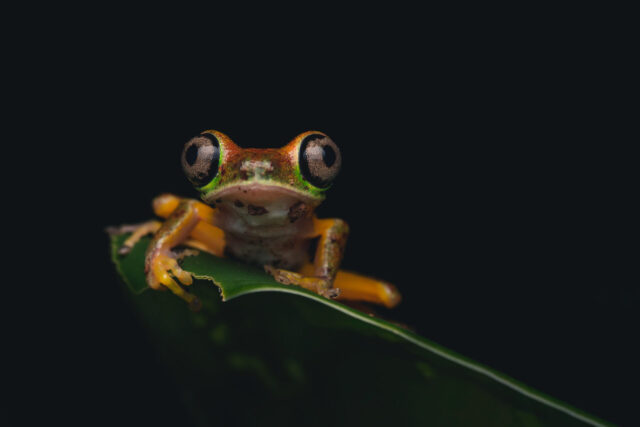
This perspective also aims to change deeply rooted prejudices. Amphibians are often associated with myths and superstitions that trigger aversion, which fails to reflect just how fascinating they truly are. Through her photography, Cynthia seeks to showcase their beauty and personality, helping the public view an animal they might have previously disliked or found repulsive through a fresh lens.
Among the groups that fascinate her most are membracids, commonly known as treehoppers. Some species mimic ants, others resemble plant thorns, and some even look like tiny bird droppings. Their shapes and strategies for blending in serve as a constant reminder of evolution’s immense creative potential.
The Challenges of Photographing the Unpredictable
Nature photography carries a constant challenge: neither the subject nor the weather conditions can be controlled. One can study an animal for hours and anticipate its behavior, yet it may still move the exact moment the shutter is pressed.
In macrophotography, these difficulties compound. The depth of field can be paper-thin, subjects are tiny, and they often remain in constant motion. Added to this are wind, rain, humidity, shifting light, and, during night shoots, complete darkness.
In Bandurek’s view, technical proficiency is essential, but it is far from sufficient:
“You also have to learn to observe and anticipate—and accept that sometimes, nature simply says no. That, too, is an integral part of photographing it.”
Ethics: Animal Welfare Comes First
For Cynthia, there is no room for compromise when it comes to an animal’s well-being. If securing a shot means harming the subject or disrupting its behavior, she chooses not to take it. ‘I prefer losing an image over capturing it by harming the animal,’ she affirmed.
Ethics in nature photography, particularly in macro work, is a core principle for her. This is why she integrates ethics into her workshops, courses, and training programs, having witnessed field situations where animal behavior was manipulated solely for a photograph.
She never handles animals or deliberately alters their behavior for a shot. ‘Photography should be a tool for drawing closer to nature, not an excuse to excessively intervene in it,’ she emphasized.”
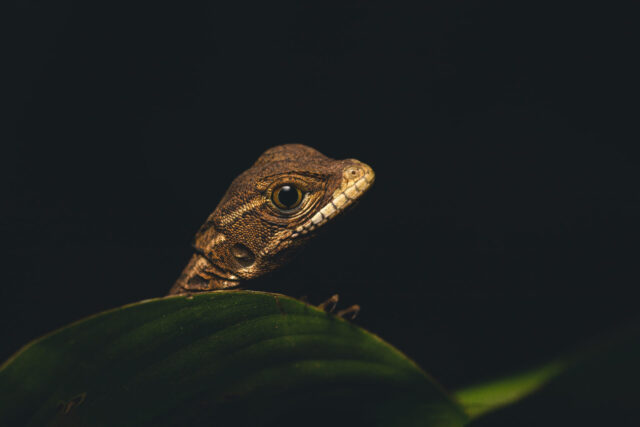
Making the Small Visible Is Also Conservation
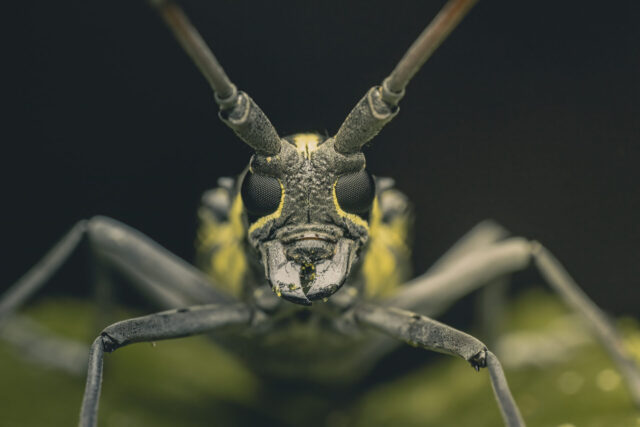
When discussing environmental conservation, public attention usually gravitates toward flagship species: jaguars, monkeys, tropical birds, or sweeping landscapes. However, healthy ecosystems are equally sustained by millions of minute organisms—often invisible to the human eye—that execute foundational ecological roles.
Macrophotography possesses the unique ability to bring this hidden world to light. It exposes intricate structures, behaviors, and ecological relationships that typically go unnoticed, sparking genuine curiosity and empathy for organisms that are frequently overlooked or misunderstood. When people gain insight into a creature and understand its role within the broader ecosystem, they naturally begin to value and protect it.
Bandurek received an early indication of this transformative potential when she began sharing macro imagery on Facebook around 2007 or 2008. Followers began sending messages telling her that, after viewing her detailed photographs, they had stopped killing household insects and had instead begun carefully relocating them outside. Those messages left a lasting impression: a single photograph possessed the power to fundamentally alter how someone perceived an organism previously associated with fear or aversion.
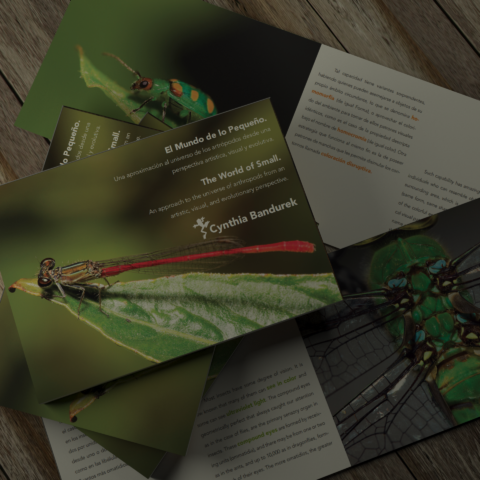
That revelation ultimately inspired her 2017 book, El mundo de lo pequeño: una aproximación al universo de los artrópodos desde una perspectiva artística, visual y evolutiva (The World of the Small: An Approach to the Universe of Arthropods from an Artistic, Visual, and Evolutionary Perspective). In this work, Cynthia combined high-resolution macro photography with natural history data, explaining the survival mechanisms, reproductive strategies, and evolutionary history of various arthropod families. Since its release, she has continued writing science communication articles across multiple publications and leading outreach initiatives designed to bridge the gap between scientific research and the general public.
Teaching How to Observe and Sharing Wonder Through Guided Walks
Cynthia also loves sharing her discoveries with others. She deeply enjoys showing someone a tiny animal right in front of their eyes and watching them discover it for the first time. Equally, she values walking alone through the forest—observing, listening, and looking through her lens. Sharing that sense of wonder and experiencing an intimate connection with nature are distinct experiences that she enjoys in equal measure.
During her guided walks, she doesn’t expect participants to walk away with a memorized list of species names. She cares far more that they remember the underlying stories: evolutionary adaptations, survival and reproductive strategies, animal behaviors, and the complex relationships between organisms and their environment. Her goal is for visitors to leave viewing the forest through a new lens—stopping before a single leaf and wondering what lives beneath it. If she succeeds in passing on a fraction of her curiosity and love for nature, she feels the walk has fulfilled its purpose.
To those aspiring to teach or communicate about the natural world, she advises gaining a deep understanding of their subject matter while mastering the art of storytelling:
“It is not enough to simply know names and scientific data: you have to spark curiosity without sacrificing rigor.”
She considers rigorous study essential, noting that passion without knowledge can lead to spreading inaccurate information. In her view, the ideal approach merges knowledge, curiosity, sensitivity, and narrative skill.
For any photographer aspiring to go far, she offers key guidance:
“I would tell them to learn to observe before learning to photograph, and not to get obsessed solely with equipment, awards, or likes. Technique can be learned; developing your own visual perspective takes much longer. But above all, I would tell them to fall in love with what they are photographing—to know, understand, and feel genuine curiosity for their subject,” she expressed.
Recognition and Industry Leadership
Since 2020, Cynthia has served as a juror for prestigious national and international photography competitions—an honor she views as significant validation of her career and artistic vision.
In Argentina, she has served on jury panels for the International Photographic Salon organized by the Photographic Society, the Jaguareté Awards, and competitions hosted by AFONA (Association of Nature Photographers of Argentina), as well as events affiliated with Argentina’s National Parks Administration.
On the international stage, she has judged for the Nature Photo Contest, India’s Photo World Carnival Photography Contest, and Russia’s prestigious Golden Turtle Photography Contest, among others. For Cynthia, having photographers and institutions worldwide trust her judgment to evaluate international work remains one of her proudest achievements.
Life Lessons
Like everyone, Cynthia has navigated difficult moments that provided invaluable life lessons. One of the most defining insights of her life was:
“Understanding that we have the right to change course, even when that means leaving behind a life built over many years and a hard-won stability.”
Relocating to another country, starting almost from scratch, and daring to build a different life requires immense courage. Doubts naturally surface, prompting self-questioning about whether the right decision was made. Over time, however, she learned that changing direction does not mean losing what was built; often, it means allowing oneself to construct a life closer to one’s true aspirations.
“That taught me to stop clinging so tightly to an idea of how things ought to be and start looking at what is right in front of me—seeking another perspective, another possibility, another way of approaching what I am experiencing. When we cannot change a situation, we can still change the way we look at it and find a fresh lens from which to move forward,” she added.
A Journey with Much Ahead
Bandurek feels she still has an immense amount to accomplish, a prospect that deeply excites her. She aspires to continue exploring and documenting micro-biodiversity—including arthropods, amphibians, reptiles, fungi, and other organisms—while developing projects that integrate science, photography, art, and storytelling. Furthermore, she aims to keep teaching people not just how to take a photograph, but how to observe and create images with intent.
She doesn’t know exactly where she will be ten years from now. But she knows the exact feeling she wants to preserve: the thrill of lifting a leaf and discovering something she has never seen before.
Connect with Cynthia Bandurek
- Instagram: @cynthiabandurek_artphotography
- Facebook: Cynthia Bandurek All Things Wild Photography and Art
- LinkedIn: Cynthia Bandurek