
Producing in Costa Rica and selling in New York involves high costs and logistical challenges, but it also presents an opportunity for growth. Andrea Kader is committed to strengthening her brand without leaving her roots behind…
For an independent brand, reaching New York is not just about design: it means exporting, bearing costs, and carving out a space in a competitive market. Andrea Kader faces this challenge from Costa Rica, where she produces her garments and runs a business that began to take shape after her return to the country. Her goal is to grow in the global city that shaped her education, with Costa Rica as her base…
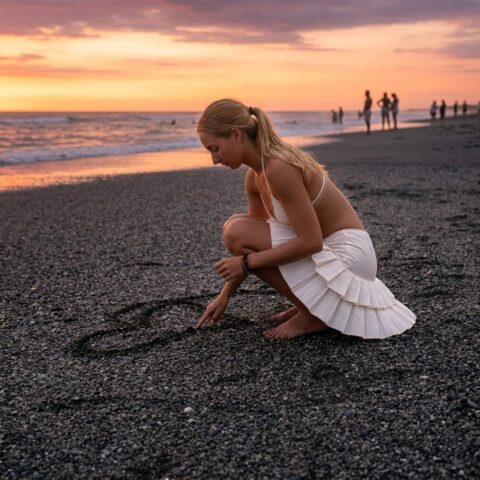
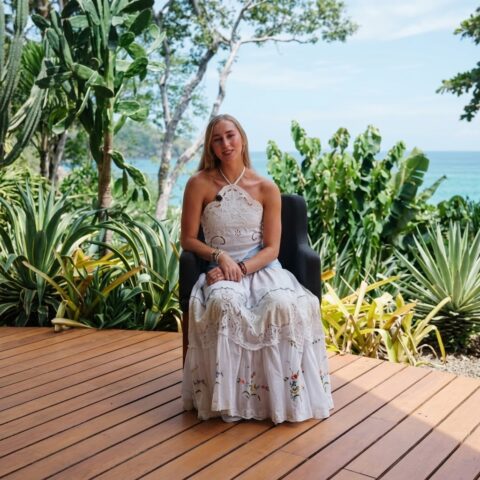
Andrea is from San José, Costa Rica. When recalling her childhood, she goes back to the hours spent outdoors, surrounded by nature: playing, exploring, and enjoying activities that she still values deeply to this day. She also remembers what she appreciates most about her country: the weather, the fresh air, the closeness between people, and access to beaches and parks. Among her favorite things, she mentions fruits, a good traditional breakfast, and anything featuring ripe plantains.
Her relationship with fashion began early, inspired both by her family and her childhood games. Her parents nurtured her love for art and fashion, a passion that, she shares, comes from her great-grandmother and great-aunt. Her grandparents on both sides also owned textile factories. As a child, she drew inspiration from Bratz, My Scene, and Groovy Girls dolls. She combined styles to create unique clothing for her dolls, wanting them to wear outfits different from her friends’ toys.
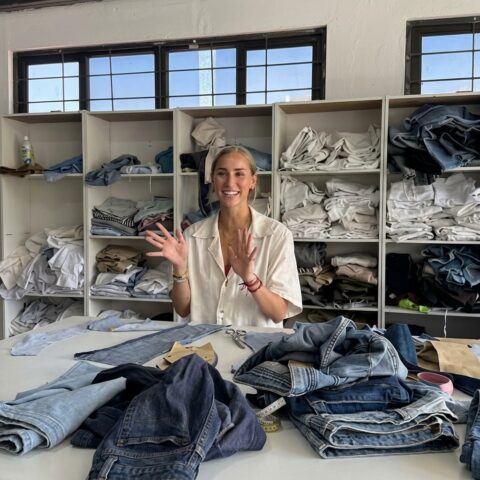
At age 12, Andrea received her first sewing machine. Reflecting on that moment, she shared that she felt super powerful, “but at the same time it was a huge challenge, as it was much harder than I thought. My mind moved faster than my hands, and I’ve never been patient, so I had to learn a lot about patience and discipline.”
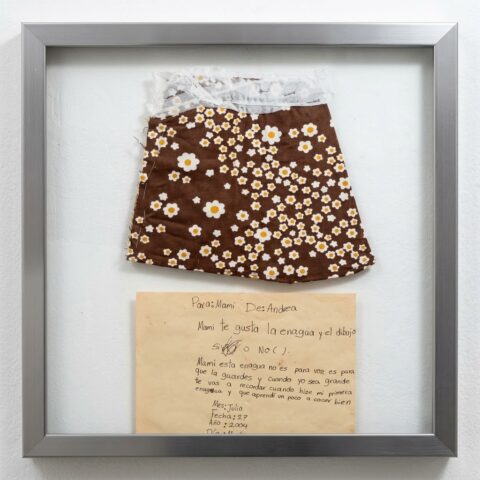
Today, she still preserves one of the first pieces she ever made.
New York: Education and Early Experiences
Between 2014 and 2018, she studied Fashion Design at Parsons The New School in New York, where she earned a BFA in Fashion Design. For her, it was “the best fashion university in the world” and, above all, the chance to fulfill a lifelong dream: studying and living fashion in New York.
REAR MORE
From her very first year, she secured internships. She worked as an assistant to a celebrity stylist and later spent time at Jonathan Simkhai, Solid & Striped, and Anne Fontaine. She describes the young woman who arrived at those experiences as “very naive,” yet intrepid and full of energy. She was open to any opportunity and made sure to approach everything with the best attitude, readiness, and gratitude. That is how she managed to enjoy the journey, although she acknowledges that the environment was sometimes toxic.
From those experiences, she learned about organization, textiles, collections, and pattern-making. She improved her communication, order, and technical drawing skills, while also learning how to create collections and organize inspiration. Furthermore, she acquired sewing knowledge and mastered Illustrator, InDesign, and Photoshop. But there was one lesson she considers especially important: she discovered what she didn’t want to do when she ran her own company.
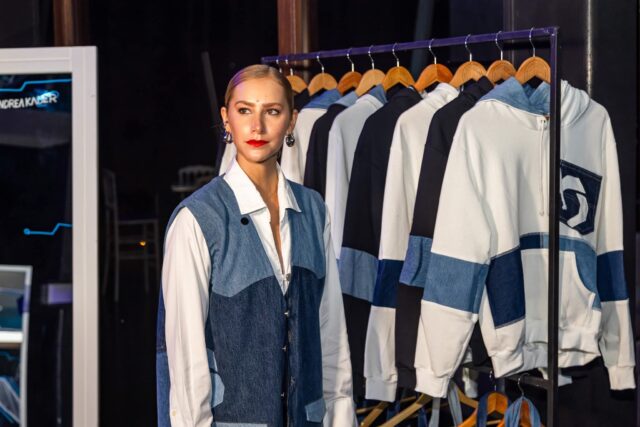
Working in large corporations also led her to question the waste generated by the fashion industry and to reevaluate her purpose. University, she recalls, taught her a lot about the creative process, but not as much about how fashion works in real life. She learned that through working and interning.
A Practical Aesthetic with Costa Rican Roots
New York profoundly influenced her aesthetic and her way of working. Living in a small space and a city with a changing climate accustomed her to thinking about versatile, practical garments. That perspective remains present in her designs: she pursues a practical, fresh, and adaptable lifestyle.
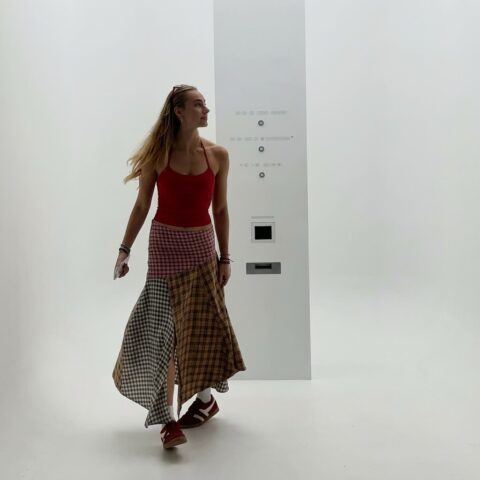
She also draws inspiration from traditional Costa Rican costumes, particularly the pattern of the traditional skirt, which she likes to recreate in more modern ways. In the future, she would like to incorporate visuals or prints that better reflect Costa Rica’s natural abundance and richness.
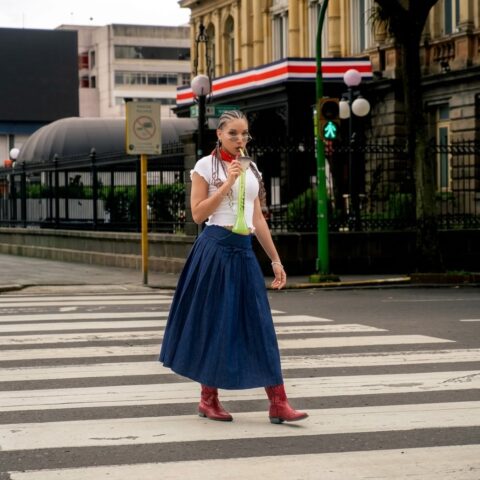
The talented tica designer says she finds inspiration in other Costa Rican women: “hardworking, responsible, passionate, and proud of their work and their contribution.” This connection coexists with a business mindset that compares opportunities in both markets. New York offers more resources, opportunities, and room to grow, but also steeper competition and higher demands for launching an independent brand. Costa Rica, being a small country, makes it easier to take the first steps, get noticed, and build valuable partnerships.
The Return to Costa Rica and the Birth of the Brand
In late 2019, she returned to Costa Rica with the idea of staying temporarily. The pandemic changed her plans. “It was the first time in my life that I stopped,” she recounts. She had always been very active, but COVID-19 forced her to slow down and gave her time to dedicate to her passion without having to rush out to social commitments. That is how she began working on her brand, Andrea Kader—her own first and last name. “There is nothing that represents me more than that,” she emphasized. It is not something that will go out of style or stop pleasing her; in her view, it is the only constant in her life apart from change.
Her designs’ very first sales happened in New York while she was still a student. She remembers them as incredible experiences: knowing that people wanted to buy what she made was thrilling. She also recalls the first garment she ever sold and summarizes it simply: “It was the best feeling in the world.”
Creating Consciously and Sustainably
At the beginning, upcycling was a way to launch the business and give it a purpose that went beyond making pretty clothes. However, last year she began to better understand its limits. “It’s an excellent way to create unique pieces, but it can be hard to scale the business: you lose quality control, reproducing identical pieces becomes nearly impossible, and the processes and products get more expensive,” she explains.
That does not mean she will abandon upcycling. Her intention is to expand the ways and resources she uses to produce consciously and sustainably.
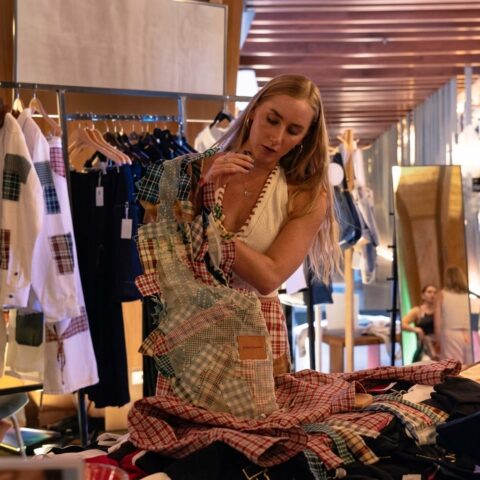
This concern is also reflected in her relationship with the people who buy her clothes. Andrea does not believe garments should be disposable. If an error or accident happens, she prefers to mend or adjust them to extend their lifespan. Regarding consumer habits, she sees a mixed picture: fast fashion continues to grow, which she laments, but there is also greater access to information and people who have chosen to change their habits.
Producing in Costa Rica and Growing in New York
Producing in Costa Rica and selling in New York entails, for now, a considerable challenge and high costs. Local production is already costly; exporting adds logistics and shipping expenses, alongside the costs of maintaining a physical presence in the city.
Even so, the Andrea Kader brand embraces this effort as an investment. The goal is to increase export volume in the near future to reduce costs and achieve more significant, sustainable growth in New York.
For the time being, Costa Rica remains her base. Andrea says she loves the country and cannot imagine moving back to New York. If she were to live somewhere else, she says she would choose a beach town.
It is worth noting that her shop in Costa Rica shares space with the Canapé restaurant; her workshop is located there and remains active during mornings to handle garment adjustments and alterations.
The brand is already stocked at Aret Studios, a New York boutique that also has a presence in Los Angeles.
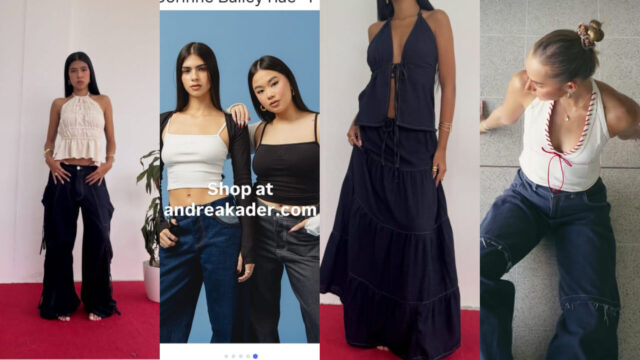
She states that, for now, her production capacity keeps her expansion focused on New York, though she is also considering exploring commercial opportunities in Mexico City.
Her New Brand: Mixed Feelings
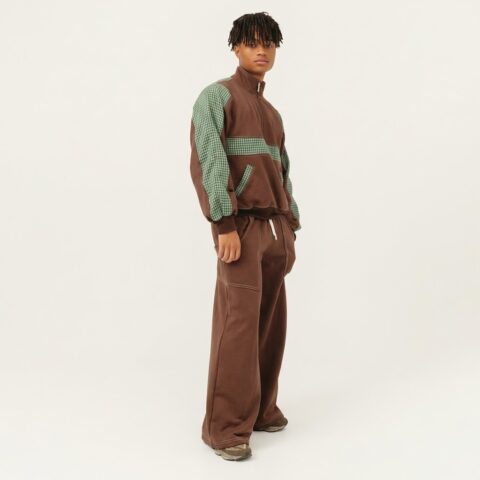
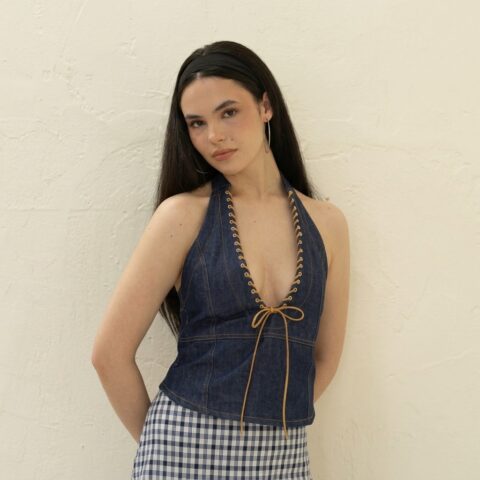
Andrea recently unveiled part of her new collection called Mixed Feelings, which explores the coexistence of opposing emotions. This initiative focuses on white and gray apparel while branching out into colors, patches, patterns, and diverse silhouettes.
The Work behind the Creativity
Today, her team consists of three full-time seamstress operators, a part-time cutter, and a store associate. Andrea still personally handles design, social media, marketing, and customer service. She hardly sews or cuts as much as she used to.
When a creative idea does not work out, she tries resolving it in different ways multiple times; if it definitively does not pan out, she changes direction. “I don’t like wasting time,” she adds.
On Her Professional Stage
She describes herself as a passionate, persevering, and energetic person. At this professional stage, she is excited by the possibility of having a bit more stability, knowing more clearly what she wants, and seeing years of hard work begin to bear fruit. As such, she is thrilled to keep growing, exploring, and improving as a designer and entrepreneur.
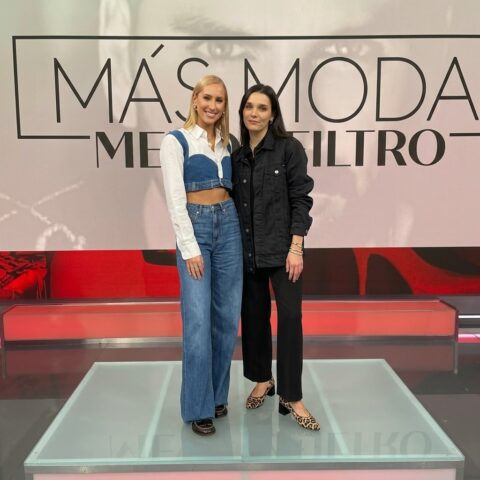
If she had to define this moment in a single word, she would choose “flourishing.” She has spent six years working steadily to build solid foundations for the company and finally feels that she is flourishing.
To anyone starting a fashion enterprise, she offers a piece of advice she wishes she had heard earlier: the administrative side is just as important as the creative side. From the start, you need organization with numbers, inventory, processes, and responsibilities. Growing without structure, she warns, can make everything much more complicated down the line.
For us, it was undoubtedly a pleasure speaking with you, Costa Rican designer Andrea Kader, who will undoubtedly achieve your goals and watch your brand grow. Wishing you great success!
You can follow Andrea Kader on social media: Instagram, TikTok, and Threads @andreakader, Facebook Andrea KB and Andrea Kader, to learn more about her, her business, and her day-to-day life.

